Buy Mushroom Gummies Online – Explore Popular Brands & Flavors
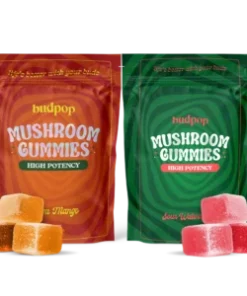
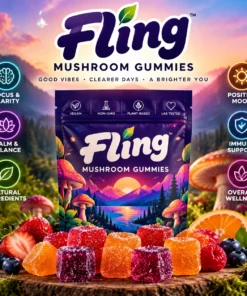
Browse mushroom gummies from brands such as CBDfx, Mmelts, Budpop, and Road Trip. Explore different flavors, formulations, and product categories, and review ingredient details before choosing your preferred option.
Shop all products
Mushroom Gummies for Sale – Compare Brands, Types & Prices
Discover a selection of mushroom gummies in different flavors, formulas, and pack sizes. Browse functional, Amanita, and other mushroom gummy categories while comparing ingredients, prices, and available product information.
Visit our shop
Best Mushroom Gummies: How to Compare Types, Ingredients, and Safety
Mushroom gummies can refer to very different products, from functional supplements made with lion’s mane or reishi to gummies marketed for psychoactive effects. We’ll help you compare their ingredients, testing information, risks, and legal considerations without treating a catchy label as proof of what is inside.

Key Takeaways
| What to know |
Why it matters |
| Identify the ingredient category first. |
Browse the magic mushroom gummies category as a starting point, then assess each product by its listed active ingredients. |
| CBD and functional mushrooms are distinct ingredients. |
CBDfx Microdose Mushroom Gummies are an example of a product listing both broad-spectrum CBD and a functional mushroom blend. |
| Look for named species, active compounds, and ingredient forms. |
A clear list makes it easier to compare a whole-mushroom ingredient with an extract or a proprietary blend. |
| Match a certificate of analysis to the specific batch. |
A useful report identifies what it tested, including relevant active compounds and potential contaminants. |
| Do not equate Amanita with psilocybin. |
These substances have different chemistry, effects, and risks. |
| Check safety and legality by ingredient and location. |
Retail availability alone does not establish that a gummy is safe, accurately described, or lawful where you live. |
Start by distinguishing functional and psychoactive gummies
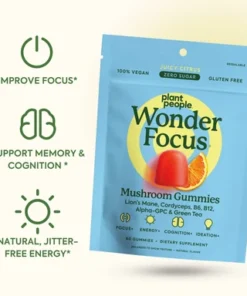
Functional mushroom gummies commonly use species such as lion’s mane, reishi, or cordyceps. They are marketed as supplements, often for goals such as focus, stress support, or energy, and those claims are separate from claims about intoxication or psychedelic effects.
“Mushroom” and “microdose” are not ingredient lists. A product name or wellness message cannot tell you which species or active compounds a gummy contains, so start with the full ingredient panel rather than the front of the package.
CBD and functional mushrooms also belong to different ingredient categories. CBDfx Microdose Mushroom Gummies combine broad-spectrum CBD with a functional mushroom blend; the listed species include chaga, cordyceps, lion’s mane, reishi, maitake, turkey tail, and shiitake.
The CBDfx gummies cost $25 and come in 15-count packages, with Blue Raspberry, Watermelon Wonder, and Sour Apple flavors. They suit this comparison because they show why a CBD-and-mushroom formula should be assessed as a combination product, not simply as a mushroom supplement.
A mushroom supplement is not automatically “good for you” just because its ingredients sound familiar. The expected benefit depends on the species, preparation, amount, and quality of the evidence for the particular claim; marketing language does not establish a reliable effect.
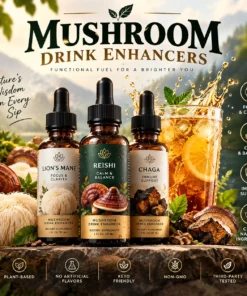
browse by category
Browse mushroom gummies by category in this infographic. It presents a category-based view to make exploring the options easier.

Compare ingredients and testing evidence carefully
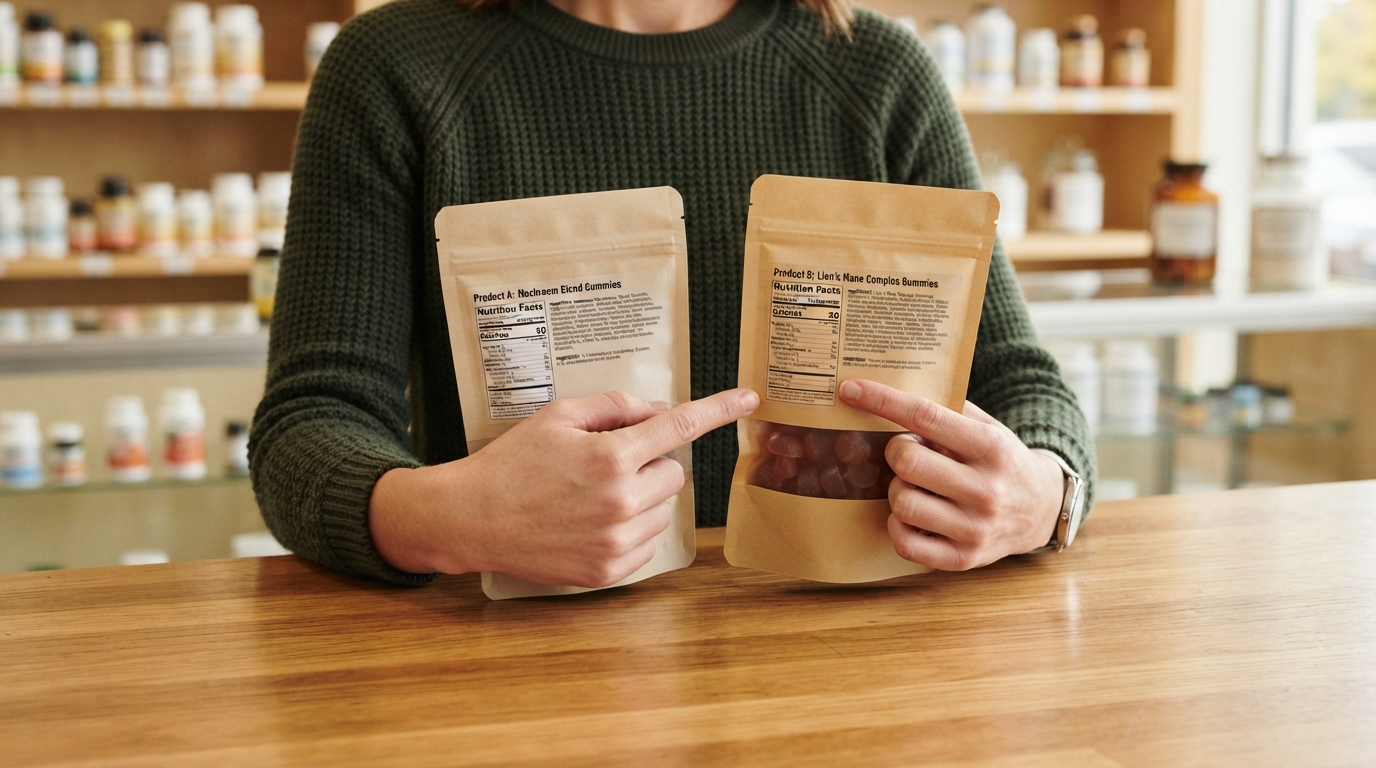
Read the ingredient panel from top to bottom and identify every active ingredient, mushroom species, and form. A whole-mushroom powder, an extract, and a blend are different descriptions; a vague proprietary blend makes products harder to compare because it can obscure what contributes to the stated formula.
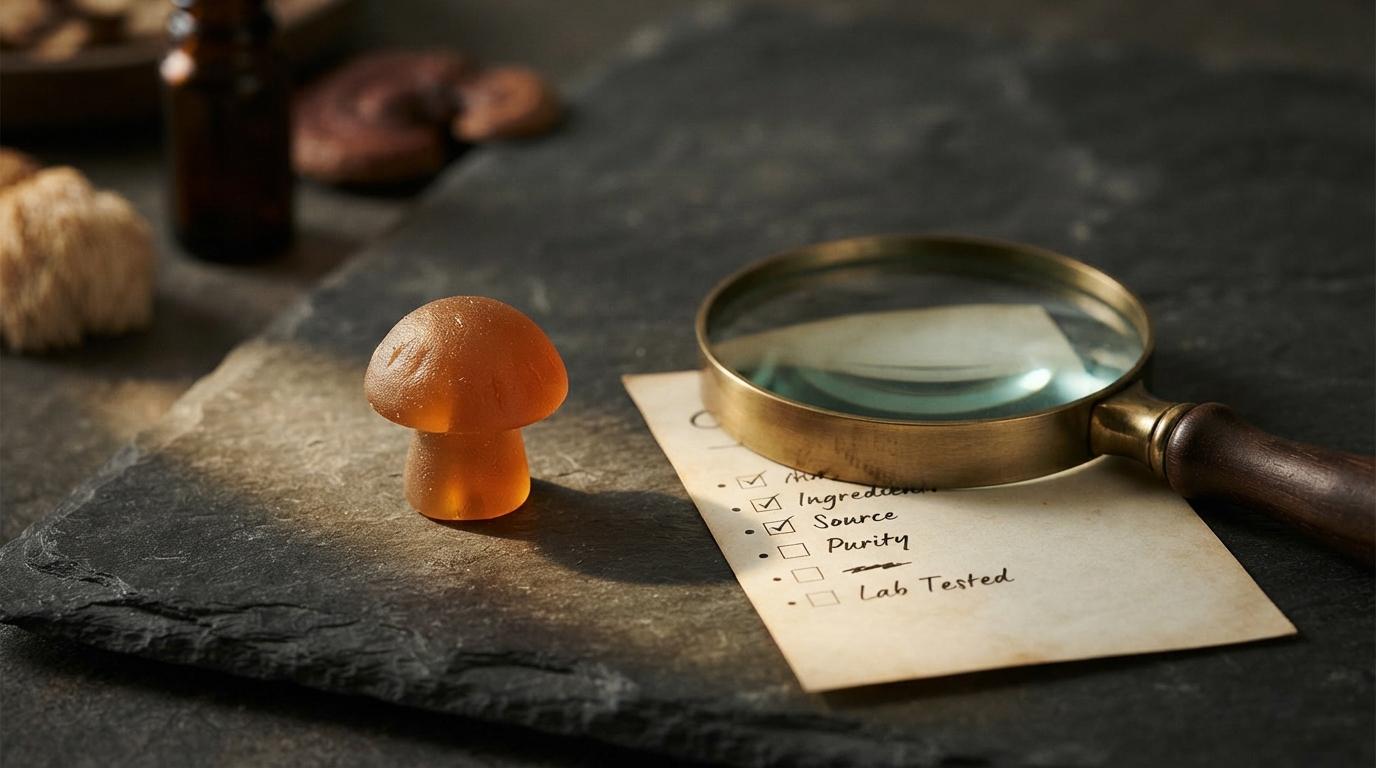
Third-party testing can add useful evidence when the report is specific and complete. A credible certificate of analysis (COA) should match the product’s batch and show the tests performed, including relevant active compounds, contaminants, and undeclared substances.
- Match the batch: Check that the report identifies the same lot or batch as the package.
- Check the analytes: The report should name the compounds it measured, not just say “tested.”
- Review safety screens: Look for relevant contaminant testing and tests for substances the label does not declare.
- Read the result, not just the badge: A generic report or one for a different batch gives less assurance about the gummy in hand.
Testing also has limits: a COA only speaks to the sample and tests documented in that report. A laboratory badge by itself does not confirm every ingredient, guarantee a consistent effect, or demonstrate that every batch has the same composition.
Mmelts Mushroom Gummies 10ct are described as a 10-count microdose blend, with Lychee Lemon, Strawberry Swirl, Watermelon Wave, Island Berry Twist, Tiki Punch, and Mango Meltdown flavors; the listed price is $25. This example is useful when comparing label language because a serving count and the word “microdose” do not replace named ingredients or batch-matched testing.
A product name can also signal a combination of ingredient categories. Budpop Amanita Muscaria Mushroom + THCP + Delta 9 Gummies (5 Count) is listed as a five-count product for $35; its name identifies Amanita muscaria, THCP, and Delta 9 together, rather than a functional-mushroom-only blend.
Understand how Amanita and psilocybin products differ
Amanita muscaria is associated with muscimol and ibotenic acid, not psilocybin. Because these compounds differ from psilocybin, Amanita products have distinct effects and risks; readers should not use the names interchangeably when comparing labels.
Psilocybin is converted in the body to psilocin, which acts on serotonin receptors. A person’s response can vary with the amount, product composition, individual sensitivity, and other substances used, so a flavor or gummy count cannot predict the experience.
The name Ascend Psilocybin gummies identifies a psilocybin gummy product priced at $25. It is a clear example of a product to assess in the psilocybin category rather than alongside functional supplements.
Medicine Of The Gods Watermelon Psilocybin Mushroom Gummies 4g are listed as a watermelon psilocybin gummy product with a 4g designation and a $25 price. Its named ingredient category and product designation make it distinct from an Amanita-labeled gummy.
When comparing psychoactive mushroom gummies, read the named compounds and the full ingredient list together. A product name, flavor, or count does not establish the exact potency, consistency, or effects of a serving.
For a named psychoactive product, treat the name, category, and any gram designation as claims, not proof of potency. Look for a batch-matched certificate of analysis that identifies the claimed active compounds it tested, along with relevant contaminant screens; check that the product and batch match the report. A report only covers the sample and analytes listed, so it cannot verify a compound it did not test. If relevant batch results are unavailable, the contents and potency remain unverified—do not infer a dose or likely effect from the name, flavor, or serving count.
Set realistic expectations for effects and claimed benefits
Functional mushroom supplements and psychoactive products make different kinds of claims. Evidence for non-psychoactive supplements does not prove mood alteration or psychedelic effects, and a claim about focus or calm should not be confused with a claim about intoxication.
Terms such as “microdose” describe marketing or a serving concept, not a guaranteed experience. Potency, formulation, personal sensitivity, and other substances can all influence how someone responds to a psychoactive product.
Onset and duration claims are not reliable guarantees. Do not take more simply because an expected effect has not appeared yet: delayed effects can lead to an unexpectedly intense experience when servings are stacked.
There is no dependable, category-wide dosage, onset, or duration range for mushroom gummies. Functional supplements, Amanita, psilocybin-labeled products, and cannabinoid combinations contain different ingredients; labels may not disclose the amount of an active compound, and a serving count or “microdose” label is not a dose measure. Effects and timing can also vary with the formulation, individual response, and other substances. For a supplement with a complete label, follow its directions and do not exceed them. If the ingredient identity or active amount is unclear, do not guess from the package or product name. A seller’s listing cannot establish a safe dose or predict when psychoactive effects will start or end. Do not take another serving because effects are delayed.
Passion Fruit, Tropic Punch, and Berry Blast are the listed flavors for Happy Caps x Road Trip Passion Microdose Mushroom Gummies 14ct, a 14-count microdose product priced at $30. That named format makes it a useful reminder to evaluate the actual formula and testing, rather than relying on the term as a promise of predictable effects.
Weigh health risks before choosing any gummy
Possible adverse effects depend on the ingredients and can include nausea, confusion, anxiety, impaired coordination, or more serious reactions. Combining psychoactive products with alcohol, sedatives, or medicines can increase risk, so avoid treating a gummy as harmless because it is small or sold as a supplement.
People who are pregnant or breastfeeding, have a significant medical condition, or take medicines should ask a clinician or pharmacist to review the complete label before using mushroom gummies. This is especially relevant to CBD-containing formulas, since CBD can interact with some prescription medicines; sedating or intoxicating ingredients can add to impairment. People with a history of psychosis or bipolar disorder should avoid psychoactive mushroom products unless a qualified clinician advises otherwise. A familiar mushroom name or wellness claim does not establish that a formula is appropriate for them.
Keep gummies in their original packaging and out of reach of children and pets to reduce the risk of accidental ingestion. If someone has a severe reaction, loses consciousness, has trouble breathing, or may have been poisoned, contact emergency services or poison control promptly.
Keep the package available for responders. The ingredient panel, product name, and batch information can help them identify what was taken and assess the situation.
Treat legality as ingredient- and location-specific
In the United States, psilocybin is generally controlled under federal law, while state and local rules and exceptions can differ and may change. Confirm current requirements with relevant government sources for your location and the specific ingredient before possessing or using a product. Do not infer legality from a seller’s label or retail availability, or apply the rules for one product category to another.
Amanita-containing products and functional mushroom supplements raise different ingredient and regulatory questions from psilocybin products. A gummy’s category name, “legal” marketing, or retail availability does not settle those questions.
Dietary supplements generally are not FDA-approved for safety and effectiveness before marketing. Retail availability is not proof that a product is lawful, approved, or accurately described, so evaluate ingredient identity and local rules separately.
Frequently Asked Questions
Do mushroom gummies show up on standard drug tests?
A standard drug test checks for specified substances, not every compound that could appear in a gummy. Specialized testing may target psilocybin or psilocin, and products containing cannabinoids raise separate testing considerations, so no mushroom gummy can guarantee a negative result.
Are functional mushroom gummies safe during pregnancy or breastfeeding?
Safety information can differ by mushroom species, extract, and added ingredients, and a blend may contain several compounds with different profiles. Because pregnancy and breastfeeding change the risk assessment, a clinician can review the specific formula alongside a person’s health history.
Can mushroom gummies lose potency over time?
Heat, moisture, light, and poor packaging can affect the quality of gummy ingredients over time. Store them sealed in a cool, dry place and follow the storage and expiry directions on the package.
Can functional mushroom gummies be taken with coffee?
There is no universal response because formulas and caffeine sensitivity vary. Coffee’s caffeine can add stimulation, so introducing a new supplement and a large caffeine change at the same time can make it harder to tell what is causing a reaction.
Can you drive after taking a psychoactive mushroom gummy?
No. Psychoactive effects can impair judgment, perception, and coordination, even when a person feels capable of driving; arrange another way to travel and wait until fully unimpaired.
How do mushroom gummies make you feel?
It depends on what they contain: functional mushroom gummies are not intended to cause intoxication, while psychoactive gummies may alter mood, perception, or coordination. Effects can vary with the ingredients, product composition, personal sensitivity, and other substances used, and may include anxiety, confusion, or nausea.
Conclusion
The best way to compare mushroom gummies is to begin with the ingredient category, then examine the species, active compounds, formulation, and batch-specific testing. Functional blends, CBD combinations, Amanita products, and psilocybin-labeled gummies have different claims, risks, and legal considerations.
We recommend treating names like “magic” or “microdose” as prompts to look closer, not as reliable descriptions of effects. A clear ingredient panel, a relevant COA, and careful attention to health and local law give you a much stronger basis for judging any mushroom gummy.
The named product details above reflect listings, not independent confirmation of ingredients, potency, effects, or legal status. Treat them as examples rather than verified test results; if the relevant batch report or current local rule is unclear, do not rely on a product name or marketing claim to fill the gap.