Polkadot Edibles: Ingredients, Safety, Testing, and Legal Questions
Polkadot Edibles can be sold as chocolate, gummies, tabs, or drinks, but a familiar name and package do not establish what is inside. At MushroomGummies.shop, we want readers to separate product claims from evidence they can actually verify.
Key Takeaways
- A brand name is not a contents check. Packaging cannot establish a product’s ingredients, potency, maker, or safety.
- “Mushroom” covers different substances. Functional mushrooms, psilocybin, Amanita compounds, and synthetic tryptamines are not interchangeable.
- A QR code is only a route to information. A useful certificate of analysis must match the exact product and batch.
- Take a suspected exposure seriously. Seek urgent help for severe symptoms or a possible child ingestion.
- Legal terms are not interchangeable. Decriminalization or supervised services do not automatically permit retail sales.
Browse our polkadot Edibles catalogue
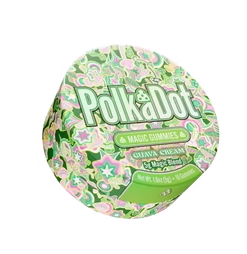
Polkadot Gummies
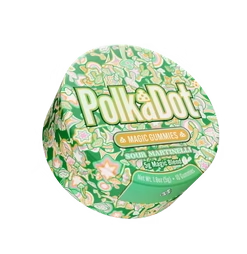
Polkadot Gummies

Polkadot Gummies
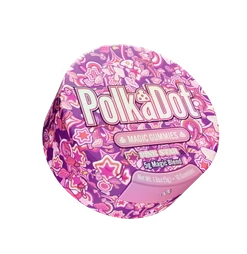
Polkadot Gummies
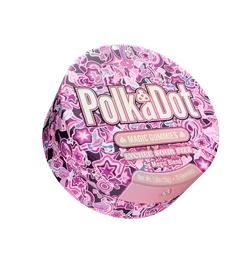
Polkadot Gummies
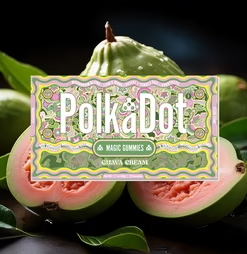
Polkadot Gummies
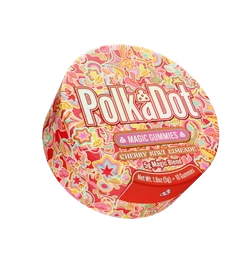
Polkadot Gummies

Polkadot Gummies
What the Polkadot name can and cannot tell you
Polkadot is a brand name used on edible products, not proof of a particular recipe or production process. A label may tell you how a product is marketed, but branding alone cannot establish its ingredients, potency, consistent production, or safety, and it may not identify who made or filled it.
Chocolate bars, gummies, tabs, and drinks are formats, not ingredient descriptions. A chocolate bar can contain different substances from a gummy, and neither the shape nor the flavor tells you whether it is psychoactive.
Two bars can carry matching Polkadot logos and seals while coming from different makers or batches. Their appearance cannot show that their contents match, so treating one as evidence about the other is a bad bet.
People searching for where to buy Polkadot products may encounter online listings. A listing shows how the product is presented for sale, not that its ingredients or batch have been independently verified.
Product names also vary. A listing for a Polkadot chocolate bar or Polkadot gummies describes an advertised format; it does not settle what psychoactive compounds, if any, are inside.
Consumers may encounter Polkadot-branded products in online listings and, depending on location, in physical shops or through informal resale. Where a seller offers them is not evidence that the seller is authorized or that the contents are authentic. Flavor names and prices shown in listings can vary; neither identifies a verified product lineup or establishes what a particular batch contains.
Functional mushrooms, amanita, psilocybin, and synthetics are different
Functional mushrooms such as lion’s mane and reishi are not interchangeable with psilocybin-containing mushrooms. A functional-mushroom claim by itself does not establish that an edible contains psilocybin.
| Term | What it refers to | What the term does not establish |
|---|---|---|
| Functional mushrooms | Mushrooms such as lion’s mane or reishi, often described by that category on product labels. | That psilocybin is present. |
| Psilocybin | A psychoactive compound the body converts to psilocin. | The contents or dose of a particular edible. |
| Amanita muscaria | A mushroom associated with compounds such as muscimol and ibotenic acid. | That its compounds are the same as psilocybin or psilocin. |
| Synthetic tryptamines | A separate group of synthetic psychoactive compounds. | That a broad “mushroom blend” label identifies the ingredients. |
These distinctions matter because a broad term such as “mushroom blend” does not name active compounds or establish a dose. Unverified wording cannot tell you what a particular Polkadot edible contains.
The Polkadot name and gummy format can appear together. Neither phrase identifies the compounds in a specific batch.
How to judge a lab report instead of trusting a QR code
A certificate of analysis, or COA, is useful only when you can connect it to the edible in hand. Match the report to the exact product name, flavor, batch or lot, and manufacturer; a report for another flavor or production run does not establish the contents of this one.
Read the report for the testing laboratory, methods, sample identity, and compounds tested. A QR code that opens a generic certificate, or a report with no clear link to the product’s batch, does not prove what is in a specific bar or bag.
Testing has limits even when a report is genuine. A laboratory result speaks to the sample and analytes actually tested, not automatically to every ingredient, the dose in every piece, or other batches from the same brand. Check the listed analytes and reporting limits: a compound not included in the panel has not been ruled out.
For context, JAMA Network Open reported that samples of 12 magic mushroom products, 11 gummies and 1 chocolate, were purchased at retail shops in Portland, Oregon. Those samples are a reason to look for product-specific testing, not a basis for claiming what every Polkadot-branded item contains.
If you want background on public discussion of psychedelic mushroom gummies and Polkadot branding, read Forbes’ reporting on psychedelic mushroom gummies. Keep the distinction clear: coverage of a product category cannot authenticate the batch in front of you.
Safety risks and what to do after a possible exposure
Do not use a claimed potency to predict effects when the contents have not been verified. Psychoactive substances can cause confusion, agitation, nausea, altered perception, or other serious symptoms, and a package’s dose claim cannot make an uncertain product predictable.
For trouble breathing, loss of consciousness, seizures, severe symptoms, or a child’s possible ingestion, contact emergency services or poison control promptly. Do not wait for a wrapper, QR code, or lab report to settle what was consumed.
For a possible child exposure, keep the package and note the time and estimated amount if known. Do not induce vomiting unless poison control or a clinician instructs you to.
In a report from the Centers for Disease Control and Prevention covering 180 cases, 73 people were hospitalized and 38 required intensive care. The American Journal of Emergency Medicine reported that most clinical effects lasted between 3 and 24 hours after ingestion (29, 81%). These figures describe the cited reports, not confirmed Polkadot products or a prediction for an individual exposure.
Packaging and seals are clues, not authentication
A hologram, branded wrapper, seal, or QR code supports an authenticity claim only when it connects to verifiable manufacturer and batch information. The visual feature by itself cannot tell you who made or filled the edible.
Compare the batch identity on any product-specific COA with the batch information printed on the package. If those details do not match, or there is no clear link between them, the contents remain unverified.
Do not treat similar-looking packages as evidence of shared ingredients, dose, or manufacturing controls. A counterfeit or independently filled product can imitate a familiar design.
Retail rules depend on location, and decriminalization is not permission to sell
Rules for psilocybin, Amanita-derived compounds, and other psychoactive substances can differ. “Mushroom” is not one legal category, so a product’s broad label cannot answer the legal question by itself.
Decriminalization, supervised or licensed services, and permission to sell retail edibles are separate things. One does not automatically establish the others, and a local policy does not determine the rules everywhere else.
Use current official state and local sources for your location, including relevant government or regulator information. Rules can vary between jurisdictions and change over time, so avoid relying on an old summary or a seller’s description as the final word.
Frequently Asked Questions
How long can the effects of a mushroom edible last?
There is no dependable duration for an unidentified edible because the compound, amount, individual response, and other substances can all affect the experience. Tiredness or impaired judgment may remain after the strongest effects fade.
Is it safe to drive after taking a Polkadot edible?
No. A psychoactive edible can affect perception, coordination, and judgment, so arrange a sober ride and do not drive until you are fully back to baseline.
Should I make someone vomit if they may have eaten a mushroom edible?
No. Induced vomiting can create an aspiration risk, especially if the person is drowsy or confused. Stay with them and follow poison control or emergency clinicians’ instructions.
Can I carry mushroom edibles across state lines?
A product permitted in one place may be prohibited in another, and a travel route may cross additional jurisdictions. Airline or other carrier policies can impose separate restrictions as well.
What should I tell poison control after a possible exposure?
Share the person’s age and weight, current symptoms, known health conditions, and any medicines or other substances they may have taken. The package can help identify the product, but do not delay the call while trying to find every detail.
Can I mix a mushroom edible with alcohol or medication?
Avoid combining an edible with alcohol or other psychoactive substances, since an unidentified ingredient can make the effects harder to predict. Ask a clinician or pharmacist about medication concerns rather than stopping a prescribed medicine on your own.
How long does polkadot chocolate last in your system?
There is no reliable Polkadot-specific answer because the ingredients may be unverified. If a chocolate contains psilocybin, the body converts it to psilocin and clears it over time, but how long it can be detected varies with the substance and the test used.
How strong are Polkadot chocolates?
There is no dependable way to judge a chocolate’s strength from its wrapper, flavor, or advertised potency. A lab report is relevant only if it matches the exact product and batch and tests for the compounds in question. Without that evidence, treat the strength as unknown rather than using a claim to predict effects.
How long does Polkadot chocolate keep?
There is no single brand-wide shelf life to rely on. Check the package’s date and storage directions, since chocolate quality depends on its ingredients, packaging, and storage. A date or normal appearance does not verify psychoactive contents or safety; avoid eating a product if its packaging is damaged or the chocolate appears or smells unusual.
Conclusion
Polkadot Edibles can look familiar while leaving key questions unanswered. A clear ingredient claim, a batch-matched lab report, and traceable manufacturer details matter more than a logo, seal, or confident potency statement.
When a product’s contents are uncertain, do not treat it like ordinary candy or assume its legal status from the word “mushroom.” Keep children away from it, act quickly after a possible exposure, and use official local information for legal questions.