Psilocybin Gummies: How to Check Ingredients, Testing, Risks, and Legal Status
Psilocybin gummies are edible products marketed as containing psilocybin, but the name on a package cannot verify what is inside. We’ll explain how they differ from other mushroom gummies, what laboratory testing can establish, and which legal and health risks deserve attention.
Browse psilocybin gummies
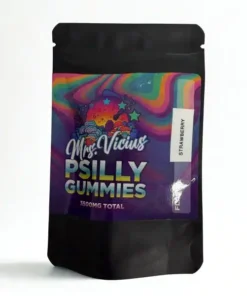
Psilocybin Mushroom Gummies
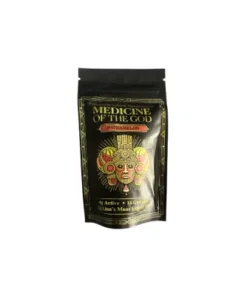
Psilocybin Mushroom Gummies
Medicine Of The Gods Watermelon Psilocybin Mushroom Gummies 4g

Psilocybin Mushroom Gummies
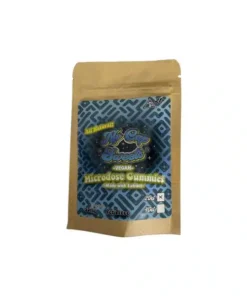
Psilocybin Mushroom Gummies
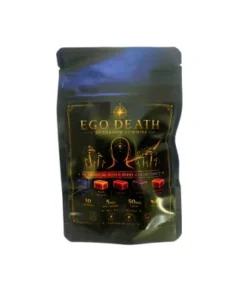
Psilocybin Mushroom Gummies
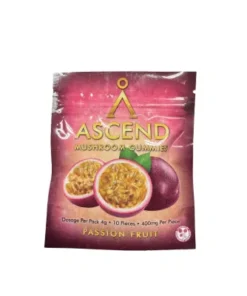
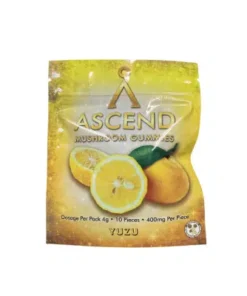
Psilocybin Mushroom Gummies
Key Takeaways
- A mushroom label does not prove psilocybin is present.
- Psilocybin and muscimol are different compounds. Psilocybin is associated with psilocin in the body; muscimol comes from Amanita muscaria and acts through different brain pathways.
- A certificate of analysis needs to match the product and batch. A generic report cannot establish what is in a particular batch or verify compounds the lab did not test for.
- Total gummy or blend weight is not active-compound potency. A label claim about total grams cannot tell you how much psilocybin or another active constituent is present.
- There is no simple state list for legal retail psilocybin gummies. State-level reforms, regulated access, decriminalization, and retail sales are different things, and federal law is separate.
- Unpredictable effects can be dangerous. Unknown ingredients, medication interactions, and severe confusion or breathing problems call for urgent professional help.
What a psilocybin gummy label does, and does not, tell you
A product marketed as a psilocybin gummy is an edible sold with a claim about psilocybin, a naturally occurring compound found in some mushroom species. The body converts psilocybin into psilocin, which affects serotonin receptors and can alter perception, mood, and thinking.
That description is not proof that a particular gummy contains psilocybin. A product name, colorful package, mushroom illustration, or claimed effect is marketing, not chemical verification.
Other products use functional mushrooms, such as lion’s mane or reishi, which are marketed for non-intoxicating wellness purposes and are not the same thing as psilocybin mushrooms.
In Portland, scientists purchased 12 gummies and chocolates labeled as magic mushrooms and analyzed their contents, according to Oregon State University. These findings describe that retail sample, not every brand or batch.
How psilocybin, Amanita, and functional mushroom gummies differ
| Product type | What distinguishes it | What to keep in mind |
|---|---|---|
| Psilocybin mushroom products | Claim to contain psilocybin, which the body converts into psilocin. | Only relevant testing can establish whether these compounds are present and in what amount. |
| Amanita muscaria products | May contain muscimol and ibotenic acid, compounds associated with Amanita muscaria. | Muscimol acts differently from psilocin. Do not treat an Amanita product as interchangeable with a psilocybin product. |
| Functional mushroom gummies | May use ingredients such as lion’s mane, reishi, or chaga for wellness-oriented marketing. | The word mushroom does not mean a product is psychedelic, or that its claimed benefits are established. |
| Other psychoactive mushroom gummies | May contain synthetic tryptamines or blends of active constituents. | Without reliable, batch-specific testing, the product’s effects and risks can be hard to predict. |
How do psilocybin and muscimol differ? Psilocybin is converted into psilocin and affects serotonin signaling, while muscimol acts on GABA-A receptors. They have different effects, risks, and duration, so assess Amanita-associated products separately from psilocybin gummies.
How to assess ingredients and a certificate of analysis
A certificate of analysis, or COA, is a laboratory report for a tested sample. It can provide useful evidence about specified compounds, but it does not automatically confirm every ingredient, the safety of every gummy, or the accuracy of every label claim.
When reviewing a COA, look for information that connects the report to the actual product:
- Product identity: The product name and form should match the item the report describes.
- Batch identification: The batch or lot number should match the package. A report for a different batch cannot verify the one in hand.
- Relevant active-compound testing: The report should name the specific compounds tested for, such as psilocybin, psilocin, muscimol, or other claimed active constituents.
- Results and methods: Look for clear results, units, and an analytical method suitable for the compound being measured.
- Safety testing: Ask whether the report covers relevant contaminants, such as heavy metals, pesticides, microbes, or residual solvents. A test for one category does not cover the others.
- Laboratory details: A named independent laboratory and information about its qualifications make a report more useful than an unattributed document.
How can you tell whether a potency claim is supported? The COA should report the specific active compound and its measured amount for the matching batch, in units that can be compared with the label claim. A report that only lists total mushroom-blend weight, or does not test for the claimed compound, does not verify psilocybin potency.
Third-party testing is only as useful as its scope and sample. A report may test a composite sample from a batch rather than every individual gummy, so it may not establish that each piece has identical contents.
Read a “not detected” result as a statement about that sample and method, not proof that the compound is absent everywhere. Check whether the report describes sample preparation, uses a method appropriate for the gummy matrix, and gives detection or quantitation limits. If it tests a blended or composite sample, a reported concentration may describe the combined material rather than every gummy; without per-piece testing, uneven distribution can remain unresolved.
A COA also cannot prove that a product is legal, medically beneficial, or risk-free. It can only speak to the sample and the substances the lab actually tested for.
To compare listings, use the same evidence standard for each rather than treating brand, flavor, or a “strong” label as proof. For instance, review the information provided for ascend psilocybin gummies and no cap psilocybin mushroom gummies: does each listing identify the active compound, provide a COA tied to the matching batch, report a measured amount with units, and explain whether results are per piece or from a composite sample? Compare contaminant panels and ingredient disclosure too. If a page omits these details or its report does not match the package, potency cannot be verified from the information shown; that gap alone does not prove the product is safe or unsafe.
This infographic compares marketing claims about psilocybin gummies with ways to verify their ingredients.
Potency claims, microdosing, and stronger-effect marketing
Potency means the amount of an active compound, not the total weight of a gummy or mushroom blend. A label stating that a package contains a certain number of grams does not, by itself, explain how much psilocybin, psilocin, muscimol, or another active ingredient it contains.
Microdosing usually refers to taking a very small amount intended not to produce a full psychedelic experience. Stronger-effect claims describe a different intended experience, but neither type of claim establishes the product’s actual contents or the consistency of its potency.
There is no dependable way to translate an unverified gummy’s total weight into an active dose. When a product lacks a matching COA that identifies and measures its active compound, terms such as microdose, extra strength, or high potency are marketing claims rather than reliable measurements.
Microdosing claims also should not be confused with evidence from supervised clinical research. Clinical studies use defined substances, careful screening, and medical oversight; they do not establish that unregulated gummies deliver the same ingredients or outcomes.
Onset, duration, and why effects can vary
Oral psilocybin can take roughly 20 to 90 minutes to begin producing noticeable effects, and effects may last around 4 to 6 hours. These broad estimates are most relevant to known oral psilocybin; they cannot reliably predict timing or duration for an unverified gummy, which may contain a different compound.
Effects can vary with the product’s actual ingredients, the amount of active compound, individual biology, food in the stomach, health conditions, and other substances or medications. A gummy’s flavor or appearance cannot tell you how strong it is or how quickly it will act.
A delayed effect does not mean an edible is inactive. Taking more to compensate for uncertainty can increase the chance of an unexpectedly intense or prolonged reaction.
Health risks and when to seek emergency help
Possible adverse reactions to psychoactive mushroom edibles include nausea, anxiety, panic, confusion, impaired judgment, and changes in heart rate or blood pressure. Unknown or mislabeled ingredients can create additional risks that are difficult to predict from the package.
People with a history of psychosis, bipolar disorder, or serious mental health concerns should speak with a qualified clinician before considering any psychoactive substance. Prescription and nonprescription medications can also affect risks or effects, so a clinician needs the full medication list to give relevant advice.
Do not rely on product marketing to assess medication interactions or mental-health risks. Pregnancy, breastfeeding, and age are also important medical considerations to discuss with a qualified health professional.
Seek emergency help for trouble breathing, loss of consciousness, seizures, severe agitation, or a person who cannot be safely awakened. In the United States, call 911 for an emergency or contact Poison Control at 1-800-222-1222; keep the package and any remaining product available for responders, and do not induce vomiting.
In a national investigation reported by the Centers for Disease Control and Prevention, among cases with available outcome data, 43.7% of persons required hospitalization.
Legal status: decriminalization is not the same as retail sale
In which states is psilocybin legal? There is no simple list of states where psilocybin gummies are broadly lawful for ordinary retail purchase. In the United States, psilocybin remains subject to federal controlled-substance law, while some state and local policies create narrower or different rules.
Three terms matter:
- Decriminalization generally changes how certain possession or use is prioritized or penalized. Sales require separate authorization.
- Regulated access may allow specified services or activities under a state framework. It does not automatically make every product or retail transaction lawful.
- Legal retail sales require rules that actually authorize the sale of the relevant product. A local policy change alone does not establish that a particular gummy can be sold or possessed lawfully.
Oregon and Colorado have adopted distinct state-level approaches, but those approaches do not make every mushroom gummy legal. Rules can differ by state, locality, activity, and product, and they can change; verify current requirements with official authorities for the place where you live or travel.
Oregon’s regulated psilocybin services are delivered at licensed service centers under a facilitator; this is an on-site service model, not authorization for ordinary retail sales of take-home gummies. Colorado distinguishes certain personal-use activities in private settings from licensed natural-medicine services, and does not create general retail authorization for psilocybin gummies. Do not treat personal-use rules as permission to consume in public. In either state, private-property permission, transport, local restrictions, and the exact substance can affect what is lawful. Check current state program rules and local requirements for the specific place and activity.
Frequently Asked Questions
Do mushroom gummies actually work?
A label alone cannot tell you what effects to expect; a batch-matched test report is more useful than the product name.
Can you trip on mushroom gummies?
The active compound determines the kind of experience; if the ingredients are unknown, the gummy’s name cannot predict its effects.
What ingredients have been found in products marketed as magic mushroom gummies?
Labels can use broad terms such as mushroom blend; look for the specific compounds named in a batch report.
Can you identify psilocybin gummies by their taste, color, or smell?
No—sensory clues cannot identify the active compound; product-specific chemical testing is needed.
What should I do if a child eats an unknown mushroom gummy?
Call emergency services or Poison Control promptly, and tell them what the child ate and when if you know.
Can psilocybin gummies be mailed across state lines?
Federal rules apply independently of state changes, and interstate transport can raise separate legal issues.
Conclusion
Psilocybin gummies are difficult to assess from packaging alone: mushroom names, potency language, and total blend weight do not verify active ingredients. We recommend treating ingredient claims cautiously, looking for batch-specific testing that measures the relevant compounds, and taking legal and health risks seriously.
When a product’s contents are uncertain, the safest choice is not to rely on a marketing claim. Psilocybin gummies, Amanita products, and functional mushroom edibles are different categories, and confusing them can have serious consequences.