Silly Dots Tablets: Claims vs. Chemical Reality
Silly Dots are marketed as flavored tablets with bold Mega, Hero, and Super labels, but a product name is not a chemical analysis. We’ll explain how to read those claims, compare the listed tiers, assess a batch-specific certificate of analysis, and understand the limits of drug testing.
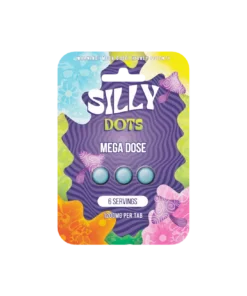
Purple silly dots mega dose
Purple silly dots mega dose
Purple silly dots mega dose

Purple silly dots hero dose
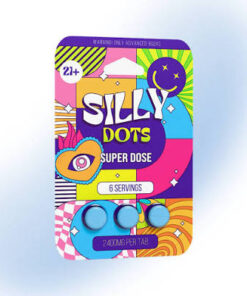
Purple Silly Dots

Purple silly dots mega dose
Party Pack Silly Dots Mega Dose 1200mg Tabs 3 Pack 10 Count Display
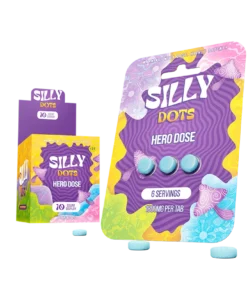
Purple silly dots hero dose
Party Pack Silly Dots Hero Dose 1800mg Tabs 3 Pack 10 Count Display
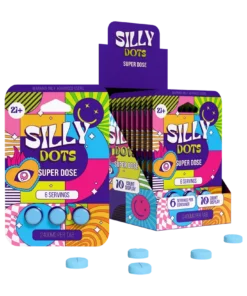
Purple Silly Dots
Party Pack Silly Dots Super Dose 2400mg Tabs 3 Pack 10 Count Display
Key takeaways
- What are Silly Dots? Products sold in tablet listings with named dose tiers and flavors. Those descriptions tell you how a listing presents a product, not what a tablet contains.
- How do the named tiers compare? Listings use 1200 mg for Mega, 1800 mg for Hero, and 2400 mg for Super. The amounts are label claims, not verified measures of an identified active compound.
- What matters on an ingredient description? Look for specific active compounds and their stated amounts. Broad phrases such as mushroom extract blend or nootropics do not identify a particular compound.
- What can a lab report establish? A batch-matched report can support results for the compounds and contaminants it tested in the sample. It cannot establish the contents of a different batch or guarantee safety for every person.
- Will a drug test detect Silly Dots? There is no reliable prediction from the product name or dose tier alone. Detection depends on the substance and the test.
- For a place to compare the available listing names, visit the Purple Silly Dots listings.
What Silly Dots are and what a product name tells you
Silly Dots are presented in product listings as tablets with named dose tiers and flavors. These are vendor descriptions: a tier name, flavor, or number on a listing does not independently establish a tablet’s ingredients, potency, or effects.
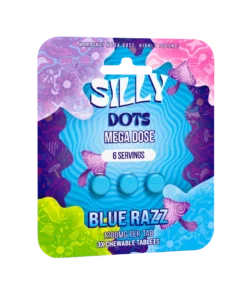
For example, the Silly Dots Mega Dose 1200mg Tabs, Blue Razz page markets a three-tablet product in Blue Razz flavor and gives it a stated strength of 1200 mg. That makes it a useful example of the kind of information a listing supplies, while the stated strength, ingredient composition, and effects remain vendor-provided claims rather than independently verified findings.
The description “mushroom extract blend” does not, by itself, name a specific mushroom-derived compound. “Nootropics” is also a broad category term, not a precise ingredient declaration; useful ingredient information identifies each active compound and gives its amount.
A separate three-tablet Mega Dose listing offers another example of how a tier and tablet count can appear in a product name. Flavor and format help distinguish listings, but neither answers the chemical question.
When reading a package, pay attention to the exact product and variant name, any specifically named active compounds and amounts, and the batch or lot identifier. Suggested serving language is not individualized medical guidance, especially when the active ingredients and their quantities are uncertain.
How Mega, Hero, and Super dose labels differ
The listed tiers use 1200 mg for Mega, 1800 mg for Hero, and 2400 mg for Super. These figures are stated label amounts, not independently verified measurements of a named active compound.
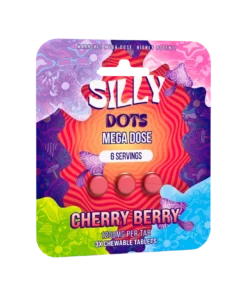
The Silly Dots Hero Dose 1800mg Tabs, Cherry Berry listing presents a three-tablet product with an 1800 mg label and Cherry Berry flavor. It suits this comparison because it shows how a named tier, stated strength, tablet count, and flavor appear together as listing details, not as a laboratory potency result.
Among the names, Super carries the largest listed amount at 2400 mg. That makes it the highest named tier by label number, but it does not establish that it contains the most of a particular active ingredient or would produce the strongest effect.
| Tier name | Listed amount | What the number establishes |
|---|---|---|
| Mega | 1200 mg | The amount stated in the listing |
| Hero | 1800 mg | The amount stated in the listing |
| Super | 2400 mg | The amount stated in the listing |
A meaningful potency claim needs to identify the compound being measured and use an appropriate potency assay. A bigger number or a more emphatic tier name cannot identify a tablet’s contents or predict how a person will respond.
Flavor and tablet count are useful for distinguishing one listing from another, but they do not establish the ingredients, the amount of an active compound in each tablet, or the effects. A Hero Dose Cherry Berry display listing is another example of a product title combining a tier, flavor, and display format.
Read ingredient and effect claims with care
Look for active compounds named explicitly, rather than inferring them from phrases such as mushroom extract blend or nootropics. A mushroom-related description does not prove that a particular mushroom compound is present, and a broad blend name does not tell you its exact composition.
Descriptions of euphoria, sensory changes, or other psychoactive effects are claims or reports, not a reliable forecast for a particular tablet or person. Effects can vary with the substance, the amount, a person’s health and other substances, and whether the product’s actual contents match its description.
Customer anecdotes can describe one person’s experience, but they cannot verify a tablet’s ingredients or establish what another person will feel. Do not treat a suggested serving or a review as medical advice or a dependable dosing guide when the active compounds and their amounts are uncertain.
When reading a product description, separate three things: what it explicitly names, what it claims the product may do, and what independent testing has established. Keeping those categories distinct makes it harder for a vivid effect description or a confident-sounding ingredient phrase to stand in for evidence of composition.
What a batch-specific lab report can and cannot show
A certificate of analysis is useful only when its identifiers connect it to the product in hand. Match the report’s product description and variant to the package, then compare the batch number; where shown, also compare the sample date and other identifying details.
- Identify the test panel. Read which substances or contaminants the lab tested for. A report can only speak to the analytes included in its tests.
- Separate contaminant screening from potency testing. Contaminant screening checks for specified contaminants. An active-ingredient or potency assay measures specified compounds.
- Look at the result type. A contaminant test may report findings for the contaminants screened, while a potency assay should identify the compound measured and report its measured amount.
- Match the sample to the package. A report for another product variant, batch, or sample does not establish what is in the tablet you have.
Third-party testing is relevant when the report identifies the product and batch and describes what the lab tested. If the identifiers do not match, or a relevant report is not available, the report cannot verify the product in hand.
Even a matching report supports only the analytes and sample tested. It does not prove that every tablet in a batch is identical, test for substances outside its panel, or establish that use is safe for every person.
Drug-test uncertainty and detection limits
Routine drug screens look for selected substances or their metabolites, not every possible compound. Whether a test detects something depends on what the screen targets and on the specific assay used.
Because a product’s active compounds may not be established by its name or tier label, there is no reliable way to predict whether a particular drug test will detect them. Cross-reactions can affect an initial screen, and confirmatory testing can change how a result is interpreted.
Detection time also varies with the substance, amount, frequency of use, individual metabolism, and specimen type. A product name or label amount cannot supply a dependable detection window, and a result from one kind of test cannot automatically predict a result from another.
Reduce risks and know when to get urgent help
Avoid combining an uncertain psychoactive product with alcohol, other psychoactive substances, or medications. Combinations can make effects less predictable and increase risk.
Do not use a dose-tier name or serving suggestion to decide what amount is safe when the active ingredient and potency are unknown. A higher label number does not tell you how much of a specific active compound is present or how it may affect you.
If someone has trouble breathing, becomes unresponsive, has a seizure, or develops a severe or unexpected reaction, seek emergency help promptly. Keep the package available and share its product and batch information with responders.
Oregon State University reports that during 2024, the Centers for Disease Control and Prevention reported 180 emergency cases related to magic mushroom products. That figure concerns magic mushroom products generally; it does not establish the contents or risks of any particular Silly Dots product.
Emergency cases related to magic mushroom products included 73 hospitalizations.
Source: Oregon State University
Frequently asked questions
How long do Silly Dots stay in your system?
There is no reliable Silly Dots clearance timeline because the label does not establish a specific compound. A substance can leave the body before a test stops detecting it, and a testing lab’s cutoff and sample handling can affect the result.
Can a home reagent test identify the exact ingredients or potency of a Silly Dots tablet?
No. Reagent kits produce presumptive reactions rather than definitive identification or a measurement of concentration, and mixtures can make results difficult to interpret.
Can a tablet’s color or flavor reveal what active compounds it contains?
No: flavor names and tablet color are sensory or appearance cues, not a chemical fingerprint. Different formulations can share a color or flavor, and flavoring can mask bitterness without identifying an active compound.
Does a label’s stated amount tell me how much active ingredient is in each tablet?
No. A label amount alone does not show how much of a specific active compound is in each tablet; that requires the compound and its amount to be identified and appropriately tested.
What information should I keep if someone has a reaction?
Keep the packaging and note the product variant, batch or lot code, when the person took it, and when symptoms began. Also share any other substances or medications involved with medical responders, since that context can help them assess the situation.
Conclusion
Silly Dots labels can tell you the vendor’s tier name, stated amount, flavor, and tablet format, but those details alone do not verify ingredients, potency, effects, or drug-test outcomes. Focus on explicitly named active compounds, a report matched to the exact batch and test panel, and prompt medical help for a severe or unexpected reaction.